
-
There has been a recent cluster of spammers accessing BARFer accounts and posting spam. To safeguard your account, please consider changing your password. It would be even better to take the additional step of enabling 2 Factor Authentication (2FA) on your BARF account. Read more here.
You are using an out of date browser. It may not display this or other websites correctly.
You should upgrade or use an alternative browser.
You should upgrade or use an alternative browser.
Never hitting that “first ride” feeling ever again.
- Thread starter rn00175
- Start date

Welp, busy weekend and so I did not have a chance to ride. Apparently I missed a newbie ride too...
But decided to commute to work today. Still not confident enough for the highway so I took El Camino from RWC all the way to San Jose. Quite the chore if I'm being honest. Too many stop lights, and everything is not second nature enough for me yet to practice something like rev-matching on my downshifts. On the other hand, I took the Central Expressway on the way back up, and much smoother than the way down. Even got to cruise at 60mph for a bit when things opened up and there wasn't too many cars around me.
Rode a grand total of 47 miles with no major mishaps today, and would do it again!
I also have a question, I find myself scrubbing speed through engine braking quite a bit, which as far as I know does not turn on the brake lights. What's considered good practice for engine braking?
I find myself using engine braking and rear brakes simultaneously to shed too much speed, which then overwhelms me as my downshifting isn't that smooth yet.
But decided to commute to work today. Still not confident enough for the highway so I took El Camino from RWC all the way to San Jose. Quite the chore if I'm being honest. Too many stop lights, and everything is not second nature enough for me yet to practice something like rev-matching on my downshifts. On the other hand, I took the Central Expressway on the way back up, and much smoother than the way down. Even got to cruise at 60mph for a bit when things opened up and there wasn't too many cars around me.
Rode a grand total of 47 miles with no major mishaps today, and would do it again!
I also have a question, I find myself scrubbing speed through engine braking quite a bit, which as far as I know does not turn on the brake lights. What's considered good practice for engine braking?
I find myself using engine braking and rear brakes simultaneously to shed too much speed, which then overwhelms me as my downshifting isn't that smooth yet.

greenmonster
Well-known member
RWC to SJ on El Camino is definitely a long haul, but safer perhaps than getting on the warzone freeway with cars dodging in and out of lanes if you’re not ready for that.
Right, the brake light doesn’t come on with engine braking alone. For that reason I’d be careful I didn’t have a car right on my ass because without that brake popping on the driver has to see your change in speed using their depth perception.
Rev matching just takes practice, too much throttle and you jerk ahead, not enough and you’re thrown forward on the handlebars.
When you pull in the clutch to downshift try letting it out slowly so the engine isn’t abruptly engaged and can sync better to the speed of the bike.
Another thought is when you’re traveling on surface streets at slower speeds don’t downshift when you’re coming to a stop. Pull in the clutch and apply the brakes. Hold the clutch in at the stop light and get yourself back into 1st gear.
Riding a bike is like playing a full drum kit. You need to coordinate both hands and both feet to make it work.
More practice and you’ll get it.
Right, the brake light doesn’t come on with engine braking alone. For that reason I’d be careful I didn’t have a car right on my ass because without that brake popping on the driver has to see your change in speed using their depth perception.
Rev matching just takes practice, too much throttle and you jerk ahead, not enough and you’re thrown forward on the handlebars.
When you pull in the clutch to downshift try letting it out slowly so the engine isn’t abruptly engaged and can sync better to the speed of the bike.
Another thought is when you’re traveling on surface streets at slower speeds don’t downshift when you’re coming to a stop. Pull in the clutch and apply the brakes. Hold the clutch in at the stop light and get yourself back into 1st gear.
Riding a bike is like playing a full drum kit. You need to coordinate both hands and both feet to make it work.
More practice and you’ll get it.
Last edited:

augustiron
A firm member
You can get the brake lights to come on without applying much braking pressure depending on what type of system you have. Experiment with each of them while standing next to the bike and looking at the brake light
Depending on the bike you have:
- most front brakes have a motion sensitive brake switch, meaning the light comes in with a certain amount of movement with the lever, experiment how much lever pull it takes to make your brake light come on
- I have found that rear brake lights are about a 50/50 split for motion sensitive or pressure sensitive switches.
If it is a motion sensitive switch, do the same experiment as the front and see when the light comes on. If it is a pressure sensitive switch, again see how much pressure makes it come on, but it is relying on the hydraulic pressure of the braking system, which means the brakes will actually start to be applied.
Knowing you can get your light to activate without adding additional or minimal slowing is a useful tool
Depending on the bike you have:
- most front brakes have a motion sensitive brake switch, meaning the light comes in with a certain amount of movement with the lever, experiment how much lever pull it takes to make your brake light come on
- I have found that rear brake lights are about a 50/50 split for motion sensitive or pressure sensitive switches.
If it is a motion sensitive switch, do the same experiment as the front and see when the light comes on. If it is a pressure sensitive switch, again see how much pressure makes it come on, but it is relying on the hydraulic pressure of the braking system, which means the brakes will actually start to be applied.
Knowing you can get your light to activate without adding additional or minimal slowing is a useful tool
Last edited:

mean dad
verum super omnia
Please do a lot of panic-stop practice. Learn how hard you can squeeze the front brake while maintaining control.
Welcome to riding!!!
Welcome to riding!!!
Don’t know how I worked up the courage but got the courage to use the highway to commute today. Quite uneventful, cruising at 70 down the highway was fine given how thin traffic is this morning.
Except that as it turns out I am still not fully ready as I tried to merge out, I was a little overwhelmed with the combination of slowing down, down shifting, and turning out the clover interchange ramp.
Went wide, used too much of the rear brake, felt the rear slide under me a little so that was a scare. But slowed down enough to recover and make the turn so all is well. Lesson learned!
Gotta practice figuring out how much lean for tighter turns at higher speeds, although taking it slower is a safer alternative especially in public roads.
Except that as it turns out I am still not fully ready as I tried to merge out, I was a little overwhelmed with the combination of slowing down, down shifting, and turning out the clover interchange ramp.
Went wide, used too much of the rear brake, felt the rear slide under me a little so that was a scare. But slowed down enough to recover and make the turn so all is well. Lesson learned!
Gotta practice figuring out how much lean for tighter turns at higher speeds, although taking it slower is a safer alternative especially in public roads.

With how many updates I’ve been putting it’s getting into that territory lolsounds like an addiction!
It even motivated me enough to wake up early to try and beat most of traffic….

gixxerjeff
Optimistic Underdog
You're a motorcycle rider.It even motivated me enough to wake up early to try and beat most of traffic….
You're always gonna beat most traffic.


(you don't have to wake up early for that.)
I don’t have the confidence to lane filter yet so unfortunately this is not the caseYou're a motorcycle rider.
You're always gonna beat most traffic.
(you don't have to wake up early for that.)

greenmonster
Well-known member
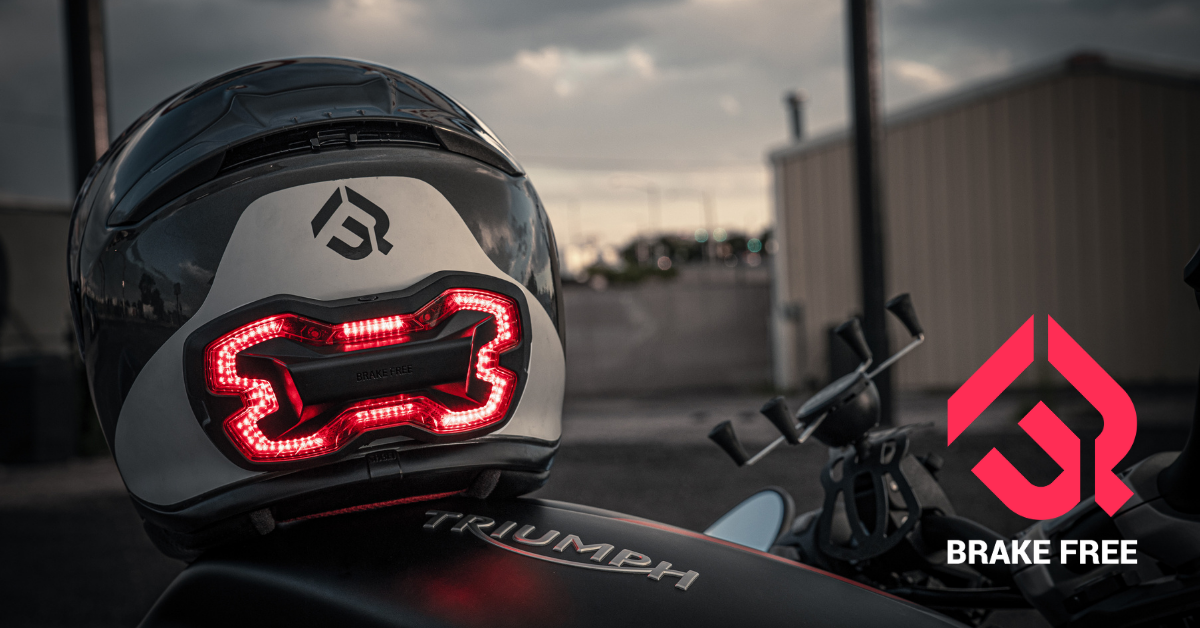
This is a gadget that goes on the back of your helmet and has a motion sensor that detects when you are slowing down, i.e engine braking, even if you aren’t applying the brakes.
It also sits high enough to attract attention since it’s up on your helmet at eye level with cars.
Looks a little nerdy though but if you’re commuting daily on the freeway it might be worth considering.
 www.brakefreetech.com
It also sits high enough to attract attention since it’s up on your helmet at eye level with cars.
Looks a little nerdy though but if you’re commuting daily on the freeway it might be worth considering.
Brake Free Helmet Brake Light
The home of Brake Free, the brightest smart high visibility helmet brake light accessory with wireless brake detection. The first detachable brake light that can easily mount to most helmets! Be seen to be safe.
www.brakefreetech.com
Last edited:
greenmonster
Well-known member
I agree about the freeway being safer in many respects. No left turners who don't see you, no oncoming traffic, no driveways where cars can jump out, no pedestrians, no lights or stop signs, no need to shift gears, just cruise...
This is assuming traffic is flowing, not stopped up.
This is assuming traffic is flowing, not stopped up.
gixxerjeff
Optimistic Underdog
And it was created by a Barfer....so there's that...This is a gadget that goes on the back of your helmet and has a motion sensor that detects when you are slowing down, i.e engine braking, even if you aren’t applying the brakes.
It also sits high enough to attract attention since it’s up on your helmet at eye level with cars.
Looks a little nerdy though but if you’re commuting daily on the freeway it might be worth considering.
Brake Free Helmet Brake Light
The home of Brake Free, the brightest smart high visibility helmet brake light accessory with wireless brake detection. The first detachable brake light that can easily mount to most helmets! Be seen to be safe.

- Joined
- Jun 19, 2002
- Location
- Walnut Creek
- Moto(s)
- Monica Sweetheart!!!!
- Name
- Berto
- BARF perks
- Barf Racer
I don’t have the confidence to lane filter yet so unfortunately this is not the case
You're on a sport bike, meaning: your front brake is primary and handles the majority of your stopping power. Learn how to use it effectively and confidently as soon as you can. Reading about your rear brake adventures worries me....and we need you here, in good shape, for the progress stories! The technique for good front braking is not snatching at the lever, but adding pressure progressively and using your legs and core to help keep your bodyweight off your palms (as much as possible).
Keep at it!

two wheel tramp
is the cutest
- Joined
- Dec 28, 2010
- Location
- your mom’s house
- Moto(s)
- DR6Fiddy x 2!, 790 ADV S, 9Fiddy SM-R, 89 Transalp, TTR2Fiddy
- Name
- Triple R
- BARF perks
- AMA #2771957
I recommend looking for a Z2 day at Sonoma and seeing if they offer the road rider course. You get to practice emergency braking.You're on a sport bike, meaning: your front brake is primary and handles the majority of your stopping power. Learn how to use it effectively and confidently as soon as you can. Reading about your rear brake adventures worries me....and we need you here, in good shape, for the progress stories! The technique for good front braking is not snatching at the lever, but adding pressure progressively and using your legs and core to help keep your bodyweight off your palms (as much as possible).
Keep at it!
You're on a sport bike, meaning: your front brake is primary and handles the majority of your stopping power. Learn how to use it effectively and confidently as soon as you can. Reading about your rear brake adventures worries me....and we need you here, in good shape, for the progress stories! The technique for good front braking is not snatching at the lever, but adding pressure progressively and using your legs and core to help keep your bodyweight off your palms (as much as possible).
Keep at it!
I recommend looking for a Z2 day at Sonoma and seeing if they offer the road rider course. You get to practice emergency braking.
Actually got some nice practice time yesterday at an empty parking lot. I did practice emergency braking quite a bit (enough space to accelerate to 30ish mph) and have been using more of my front brakes.
Still working on gauging distance and when I should start braking when traffic comes to a complete stop but I’m sure that will come with time.
two wheel tramp
is the cutest
- Joined
- Dec 28, 2010
- Location
- your mom’s house
- Moto(s)
- DR6Fiddy x 2!, 790 ADV S, 9Fiddy SM-R, 89 Transalp, TTR2Fiddy
- Name
- Triple R
- BARF perks
- AMA #2771957
That's excellent. But go take the course if you can. I have and found it very helpful.Actually got some nice practice time yesterday at an empty parking lot. I did practice emergency braking quite a bit (enough space to accelerate to 30ish mph) and have been using more of my front brakes.
Still working on gauging distance and when I should start braking when traffic comes to a complete stop but I’m sure that will come with time.
greenmonster
Well-known member
Don’t be impatient with your progress. I know it’s repetitious but you’ll get better as time goes on.
This isn’t something you can read about or see a video and then you’ve got the complete picture.
And frankly, riding a moto would be boring if it was that way. A lot of your knowledge will come from personal discovery and exploration.
This isn’t something you can read about or see a video and then you’ve got the complete picture.
And frankly, riding a moto would be boring if it was that way. A lot of your knowledge will come from personal discovery and exploration.
two wheel tramp
is the cutest
- Joined
- Dec 28, 2010
- Location
- your mom’s house
- Moto(s)
- DR6Fiddy x 2!, 790 ADV S, 9Fiddy SM-R, 89 Transalp, TTR2Fiddy
- Name
- Triple R
- BARF perks
- AMA #2771957
I'll add to this: One of my very favorite parts of motorcycling is that you are always, always learning and working on something.Don’t be impatient with your progress. I know it’s repetitious but you’ll get better as time goes on.
This isn’t something you can read about or see a video and then you’ve got the complete picture.
And frankly, riding a moto would be boring if it was that way. A lot of your knowledge will come from personal discovery and exploration.