A Buyer's Guide to Trials Bikes
Where can I find a used trials motorcycle?
Craigslist
ADVRider Craigslist Trials Finds:
http://advrider.com/forums/showthread.php?t=817109
Club Postings:
http://www.trialsclubs.us/
LewisportUSA:
http://www.lewisportusa.com/
Ryan Young/Sherco USA:
http://www.rypusa.com/content.cfm?action=4
American Beta:
http://www.americanbeta.com/node/763
The Tryals Shop:
http://www.tryalsshop.com/preowned.html
BJ Racing (Vintage):
http://www.bjracing.com/id120.html
TrialDog:
http://www.trialdogmotorsports.com/forsale.htm
Jack's Cycles:
http://www.jackscycles.com/used.html
Trials Source:
http://www.trialssource.com/usedbikes.html
Motoventures:
http://www.motoventures.com/new-and-used-trials-bikes-sale
Pre-'65 Trials (Ariel HT5)
Trials Bikes A-Z http://www.advrider.com/forums/showthread.php?t=489179
Many consider air-cooled twin shock vintage trials for a first trials bike
http://www.twinshock.org/. Within the vintage trials context, they are capable to compete in. They are well suited for trail and play riding, but due to spare parts availability and collector desirability, the prices tend to be close to a modern used bike. Example: a '70s TL125 range from ~$900-$2500; Early '90's Beta ~$1500-$2000; and a 2005 model $2500-$3500. Prices tend to be significantly higher in the East and West Coast compared to the Mid-West and Rockies.
The most popular vintage trials bikes with a solid parts support network are the:
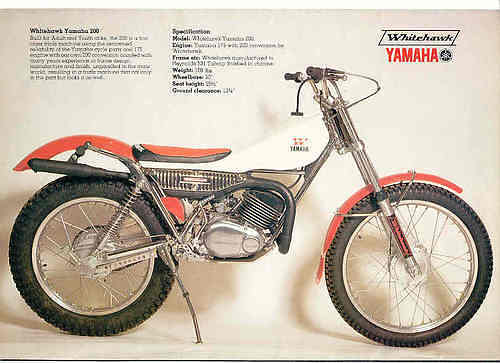
Yamaha TY,
Honda TL, and possibly the
Bultaco Sherpa T or
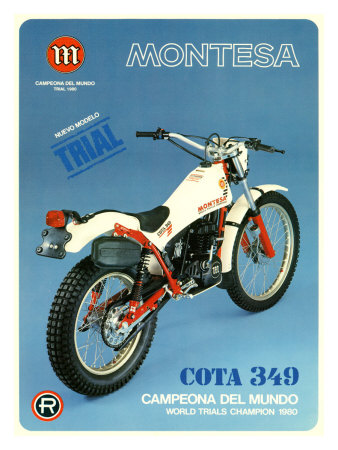
Montesa Cota. Visit:
http://www.bjracing.com/vintrials.html;
http://amsracing.com/amsracing.com/ or
http://www.smproducts.co.uk/. The 1965 Bultaco Sherpa revolutionized the sport with the introduction of the 2-stroke; the next major development was the 1970
Honda RTL250 Sammy Miller prototype which weighed 198 lbs with magnesium and titanium bits. The production TL250 weighed 230 lbs. and the TL125 194 lbs. Many argue that these Honda 4-strokes are, in reality, more trail play bikes than true competion models: I would defer to Eddie Lejeune to disprove that point of view.
These vintage bikes are closely related to the MX and Enduro bikes of the era, and are relatively heavy. According to the August 1986 edition of Cycle; the Honda TRL200 Reflex weighed 231 lbs.; a Yamaha TY250 weighs 205 lbs.; and a TY125/TY175 weight 196 lbs. In comparison a 2002 GasGas Pro or current Ossa 280i weigh less than 150 lbs. (Wet) stock from the manufacturer.
[YOUTUBE]VvRRuyoPQhw[/YOUTUBE]
Monoshock models from the 80's and early 90's such as the
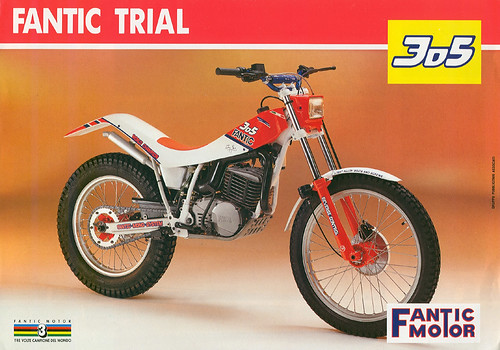
Fantic 301/302/303/304/305/307/K-Roo, Aprilia Climber 280R,
Beta TR32/33/34/35/Zero/Synth/Gara are generally dificult to find parts for as they have an even smaller following than the 70's era trials bikes. They often have drum brakes, cable operated clutches, no reed valves. They feel relatively heavy and often have peaky powerbands due to experiments with expansion chambers and no reed blocks. If you are truly interested in this era, here's an excellent website:
http://www.retrotrials.com/
[YOUTUBE]He7OW8YVdX0[/YOUTUBE]
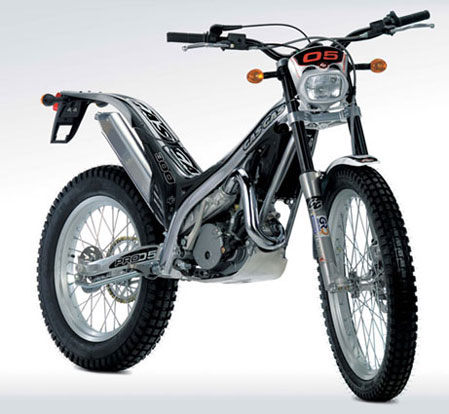
Notice the evolution where the seat diminishes from the '70; and is non-existent in the '90s models. The older heavier models that have real seats are more suited to trail/play riding if compared to current competition models.
Unfortunately vintage trials bikes often cost as much or more than used 'modern' trials bikes. Let's define modern... liquid cooled, disc brakes, case-reed intake or 4-stroke, mono-shock.
If you question the performance envelope of a vintage bike with an air-cooled piston port motor, damper-rod suspension, and drum brakes; in trials is more about the rider than the equipment. Here are a few videos to support the argument:
Charles Coutard in 1977 on a Bultaco Sherpa (200 lbs.) and in 1987 on a Yamaha TY250R (216 lbs.):
[YOUTUBE]s-3-9Xi5a_k[/YOUTUBE]
Eddy Lejeune in 1986 on a Honda RTL250S (180 lbs. 4-stroke):
[YOUTUBE]_ZGqHLrWOv0[/YOUTUBE]
Modern trials bikes:
The key developments over the past 20 years that differentiate modern trials bikes from their ancestors:
1. Hydraulic Disc brakes (4-piston front, 2 piston rear) - AJP Braktec, Brembo (Montesa), Formula (Sherco, JotaGas 2012) GasGas used Formula in 2012 but like JotaGas returned to AJP in 2013.
2. Hydraulic clutch - AJP, Formula, Magura
3. Case reed valve intake - often modified with Moto Tassinari or Boyesen reeds
4. Liquid cooled
5. Tubeless Radial tires (lighter). Front tires still use a tube.
6. Adjustable suspension
7. Elimination of the seat/subframe
other developments: interchangeable cylinder head inserts, dual ignition maps, Michelin X Light tires, Ducati ignition/stators changed to more reliable Kokusan, synthetic pre-mix to run 80:1 or 100:1 ratios.
Some things that didn't work or didn't sell: USD forks (heavier, and tend to leak), Titanium fastener kits (to shave another 7 lbs. - none were ever sold by GasGas USA), Magnesium cases (corrosion) - GasGas 2002 Pro and Raga use magnesium cases to acheive a 1.7 lbs. saving but issue a
technical bulletin regarding corrosion. Beta used a no linkage rear suspension from 2000-2008 on the Rev3/Rev4 - similar to KTM PDS. Although providing weight savings, Beta returned to linkage rear suspension on the Evo. Mag wheels (
Merlin,
Mecatecno)
Cottage Industry: Most components are shared by the manufacturers: Morad (nee Akront) wheel rims, AJP brakes cylinders/calipers, Domino throttles, Marzocchi or Paioli forks, Ohlins/Olle/Sachs shocks, Braking or Galfer rotors and brake pads, Talon Hubs,
Ordonez radiators, S3 2-stroke cylinders, Renthal/Hebo/Jitsie/S3/Tomaselli handlebars, Keihin (PWK 28mm) or Dell'Orto (
PHBL 26mm) carburetors, Lionelli electrical controls/rectifiers,
Comex radiator fans, and Kokusan stators. In fact trials footpegs (S3/Raptor/Jitsie) are universal fit.
Verlicchi makes the aluminium frames for Montesa and Beta with JotaGas pending. Sherco supplies engines to both Sherco and Scorpa. Honda (CRF250) and Yamaha (YZ250F, TTR125, TTR250) supply 4-stroke motors. Tires are usually Michelin, Dunlop, Pirelli as OEM with IRC or VeeRubber aftermarket.
Top of the line models use the Keihin PWK28 carburetors rather than the Dellorto PHBL 26. The 250 and smaller models don't seem to benefit from the larger Keihin carburetor, and the PHBL is considered simpler to keep clean and correctly jet. In 2003, GasGas tried the
Dellorto VHST28 carburetor which is similar to the Keihin PWK, but reverted back to the PHBL in 2004. One aftermarket replacement we should mention is the Oko 26mm PWK clone which was supplied in
Xispa 2007-2010 Trials models. Here are links to more info:
http://www.mid-atlantictrials.com/OKO.html and
http://www.classictrial.co.uk/okokitsspanish.html Here's an excellent thread comparing the PHBL, PWK, VHST and the OKO:
http://www.trialscentral.com/forums/topic/34754-phbl-versus-vhst-carb/
Since the manufacturers are relatively small, and the market quite specialized; the modern trials bike built for the masses is, with the exception of fine-tuning, identical hardware to the motorcycles rode by the World Champions.
Suspension: Most models over the past 20 years ran a 38mm
Paioli RSD front fork with spring preload on one fork, and rebound dampening on the opposite fork. In 2004 GasGas switched to
Marzocchi 40mm aluminium forks in the Pro model (also used by Ossa, Jotagas) which provided compression dampening in one fork, and rebound in the opposite fork, but Beta and Scorpa (until 2008) retained the older Paioli RSU 38mm. 2007+ Marzocchi are (black) aluminium tubes for a 2 lbs. weight reduction at 6.3kg. Montesa uses Showa components which are quite impressive. Rear shocks:
Sachs, Paioli, and
Olle are usually only rebound adjustable. Aftermarket rear shocks are availabe from
Reiger, Ohlins,
TRP. GasGas (2012), Jotagas, and Sherco have adopted the
Formula 'Tech' Factory 39mm (5 Kg.) fork for the newest models. Tech forks usually have steel tubes, but the new 2013 forks for the GasGas Raga Replica has aluminium tubes for a further 700 grams reduction.
Many new riders make the mistake of selecting a 270, 280 or 290 as a first bike - that's a lot of bike for a novice: the 270/280//290 spin up and hit hard to suit expert riders clearing 8' obstacles. Surprisingly the torquey 300 spools up slower, and has a very linear powerband. These 'big-bore' engines with high-compression and low exhaust port height can be a challenge to kickstart. The British and the Europeans find it amusing that Americans are obsessed with the 300cc+ 'Big-Bores' which only sold well in the US Market in the mid-1990's.
Experienced riders consider a 200 as an ideal first bike, which is relatively easy to start. The only current model offered is the Beta Evo 200. The Sherco ST 2.0 was made from 1999-2009 and GasGas offered a Pro 200 until 2006.
We're fortunate to own a GasGas TXT Pro 200 with a S3 225cc kit. 200cc models are in high demand and fetch a premium price. The 125 is a youth model and a great way to start: but hard to find in the US and also demand top price. Although a 200 weighs almost the same as a 125, the 125 feels lighter to ride due to flywheel effect. A 225cc overbore kit for 125cc bikes is available.
4-strokes? The 2004 FIM proposed 4-stroke ruling drove the manufacturers (Montesa, Beta, Scorpa, Sherco, GasGas) to develop and offer 4-strokes. The 4-stroke ruling never came into fruition.
You are currently limited to Montesa (available even if not officially imported into the US due to conflict with American Honda) and Beta. Sherco, Scorpa and GasGas abandoned 4-strokes for competition trials motorcycles. GasGas offers the
TX125 Randonne which uses a Yamaha air-cooled motor. Similar to the vintage Honda TL125 the Randonne feels anemic and heavy. Scorpa has a similar offering: the TYS125. The 4-strokes feel heavier with more front weight bias, and have a much louder exhaust note than the 2-strokes, but the 4-strokes are very tractable and the Montesa 4RT has been winning World Championships with Toni Bou.
Laia Sanz rode a Montesa 4RT but currently rides a GasGas 2-stroke.
Electric options? Both GasGas and
Kuberg offer full size electric versions:
[YOUTUBE]pe254GFOUfQ[/YOUTUBE]
Oset,
Mecatecno, GasGas, Xispa, and
Kuberg offer electric mini-bikes:
http://electrictrials.com/forum/index.php?PHPSESSID=78632ae2f55b2106d121d5bff7814f6a&#c2
The sub-150 lbs, modern trials bike emerged in 2002 -
Note: A trials bike can be reliably built at under 60 kg. (132 lbs.) but per F.I.M. rules: The minimum weights of the Trial motorcycles, for Outdoor events only, are:
• For 125cc cylinder machines: 65 kg (143.3 lbs.)
• For higher than 125cc cylinder machines: 66 kg (145.5 lbs.). The minimum weight has been raised to 70 kg. (154 lbs.) for 2014.
At any time during the event, the weight of the verified motorcycle must not be less than the minimum weight required.
GasGas, Spain. Gas Gas emerged in 1985 from the financial demise of Bultaco when two agents, Narcis Casas and Josep Piebernat found themselves with a shop but no product to sell. The name Gas Gas literally means "to gas it" (to accelerate, give it the gas, turn the throttle - to go faster.) GasGas has the largest market share and parts availability. GasGas is estimated to have between 60%-80% of market share, sells more trials bikes than the other 6 manufacturers combined. The current TXT Pro (TXII) model was introduced in 2002.
The previous model:
Jordi Tarres developed TXT has roots in the 1994 to 2004 JT/JTR/JTX/TX/TXT/'Edition' model lineage. The engine, chassis, and suspension components were essentially unchanged over the 10-year production. Any changes were incremental but not revolutionary: plastics, fueltank, subframe/airbox, wheel hubs, and front brake calipers. The TXT engine was also used in the GasGas Pampera and is the foundation of the GasGas EnduroCross (EC) models.
The older, heavier engine design, similar to the Sherco powerplant, is bullet-proof. For this reason I own a 167.6 lbs. (Dry Weight) 327cc JT35 which is well suited for trail riding. The 1996-1997 JTX370 'Long-stroke' (338cc) was the biggest motor built to date.
note the similarity to GasGas Pampera MKI
Introduced in 2002, the GasGas Pro revolutionized engine design by shaving 17 lbs. from the engine and brought modern trials bikes to the sub 150 lbs. era. The Pro engine uses a diaphragm clutch similar to automobiles to reduce weight. The GasGas
'Four-Six transmission' is a innovative design using 4-gears to provide 6 gear ratios; with 1st-4th close ratio for trials and 5th/6th wide-ratio for trail riding. The Pro engine is criticized for being more fragile than the older TXT design, or the competitiors which have heavier engines.
[YOUTUBE]8lMemyyyhVE[/YOUTUBE]
Other manufacturers achieve weight reduction in chassis and engine materials. Magnesium cases as found on Beta Zero and GasGas Pro Raga are prone to corrosion. The 2003 Pro motor changed from the 2002 magnesium cases to aluminium. The Raga replica used anodized magnesium cases for a 1.7 lbs. weight saving, but in 2013 have returned to aluminium engine cases.
jse said:
The 02' engine and clutch cover is Magnesium (painted) and the later ones (except for the Raga: anodized magnesium) are aluminum and the sealing system for the "top hat" servo cylinder post is 2 o-rings for the 02' and a seal and single o-ring for most of the later models. The '02 clutch cover exhibited excessive flex so ribs were cast on the inside of the clutch cover on the 03' on up.
GasGas used a color scheme to identify the different models up to 2006: Yellow 125cc/160cc/200cc Red 250c/280cc Blue 300cc. In 2002-2004 GasGas offered both the "Edition" model which was the older TXT design and the current TXT Pro.
The first year (2002) release of the GasGas Pro engine had reliability issues in the new diaphragm clutch. These issues were addressed by 2004, but some still regard GasGas as less reliable than other manufacturers. A 2004 magnesium clutch cover upgrade with a design to improve cooling and clutch slave cylinder stroke was increased. The clutch cover upgrade is available for 2002-2004 Pro models. I believe the current quality is close between the 6 current manufacturers, but GasGas product differentiation for a lighter weight arguably produces a more fragile engine than the 2 stroke engines offered by Sherco or Beta; or the Honda-Montesa and Yamaha 4-stroke engines.
Chassis: In 2006 GasGas converted from the chromed oval steel frame to 2007/2008 black oval frames to reduce cost, 2009 to present models use round tube CrMo frames to further reduce manufacturing cost. Some look for the 2002 GasGas frame with a steeper head rake. The 2003 onward frame geometry between the Chrome or Black Oval tube frame, and the current round tube frame in Red, Gold, Black or White, remained the same. I don't believe there was a deterioration in strength or durability with the GasGas chassis changes from 1991-2013. In 2010 GasGas followed Sherco's 2009 lead and offered a TXT280 Eco model that uses the 2008 black frame and a tube-type rear rim. Most trials rear tires are tubeless to run at 3-4 psi. Front tires still use tubes at 6-7 psi.
[YOUTUBE]dw_0HKdfuyg[/YOUTUBE]
2013 Adam Raga Replica
Beta, Italy. The name Beta comes from the initials of Enzo Bianchi and Arrigo Tosi, who founded the company in 1948. Beta has a reputation of a quality build with what is considered the most reliable European motor; and promotes the aluminium frame. Current Beta's have roots in 7-time WTC Champion
Dougie Lampkin development of the aluminium framed Beta Techno.
The 1994-1999 Beta Techno was criticized for the rear brake. Early model magnesium engine cases were prone to corrosion which resulted in coolant mixing with transmission oil. Front feels heavy compared to modern bikes: it's a 177 lbs bike!
The Rev3 had some early issues with the Ducati stator. Look for a Kokusan update. The carburetor is notorious for
dripping fuel when on the sidestand for prolonged periods. GasGas and Sherco use the same Keihin PWK28 but don't have the same issue. Beta offers Rev4 4-stroke models 250 & 300. First year (2007) of the 4RT may have right engine case leak, fixed in 2008. Both Lampkin and Fajardo opted for different clutches on the Evo. I personally do not like the Beta Left side kickstart. Beta turn tighter than a GasGas.
Beta has a factory Rev3/Rev4/Evo 'Long ride seat/tank' for those who intend to trail ride rather than compete in trials.
[YOUTUBE]VleZ0WA_s1U[/YOUTUBE]
Unfortunately the US Beta Importer has changed 3 times, with each new entity not purchasing the previous spares inventory. Therefore parts for the older bikes (1994-1999 Techno), tend to be difficult to source.
Sherco of France & Spain are well known for reliability. The motors are similar in design to the GasGas TXT motor which reflects in the weight, and slower reving character. The Sherco similarity with the 1990's GasGas modes isn't a coincidence...
[YOUTUBE]oW266OOCCGo[/YOUTUBE]
Josep Paxau has designed and created the prototypes for manufacturers each since the first Mick Andrews Ossa was created.
He has also maintained the machines of the top riders of Spain , from Luis Gallach and Jordi Tarres to Albert Cabestany and Becky Cook. The work of Paxau is everywhere.
After Ossa, Paxau worked for Merlin then GasGas and now Sherco. He even developed his own very early monoshock Trials bike around 1985 , which was very early for a monoshock chassis.
The name Paxau , is I am told not be taken lightly has much influence in the area.You would be forgiven for thinking that Josep worked for the above motorcycle companies at the factories , but no. Paxau has always worked from these workshops. From the early days his creative work and engineering knowledge was recognised.
Merlin , GasGas and now Sherco all came to him , up in the mountains for their bikes to be created. He doesn't go to them. They did back then and still do now. Manufacturers effectively contracted out their Research and development to Paxau , leaving them to concentrate on production. They commission him to design and build next years model and he works with the top riders to take the bikes to the next level.
This means that right now , he will be working on the model one year on from the models that's just been released.
Paxau has his own motorcycle workshop in Torello , Catalunia. At the front of his workshop he has a Trial motorcycle shop. I went there during 2011 and met Josep.
Torello is a very small quiet town high up in the Pyrenees mountains of Spain. It is isolated and about 2 hours drive from Girona. It was quite a surprise to me that in this place, far away from industrial areas and motorcycle companies was , and still is the centre of Trials development.
The small shop is very neat and tidy. There is a very smart lady , rather like a secretary sitting behind a wide desk top .If you buy anything you get an official receipt with your name and details contained on it. Its an official and tightly run place. You get that feeling immediately. Dark tinted glass etched with "Paxau" shields the shop from the hot sun. Posters and pictures of Trials starts cover the walls. Many of these posters have autographs and little notes written thanking Josep for his work. Gallach, Renales, Tarres, Cordina ,Freixas and more.
Paxau developed the GasGas halley of Gabino Renales and Andrew Cordina. The magnificant and striking machines of Merlin. The first watercooled GasGas if Amos Bilbao. The red Fortuna GasGas , 3x World Championship winning machines of Jordi Tarres. Paxau still keeps working and now produced all of the new Bultaco and Sherco models in addition to maintaining the machines of Albert Cabestany.
After Merlin dissapeared from the motorcycle world , Paxau continued with the new tenants of the same Merlin factory , GasGas.
Josep designed the first GasGas Halley for Narcis Casas and Josep Pibernat .He then designed and created a working prototype of every model until he stopped working for GasGas in 1996.
Why did he stop working for GasGas in 1996?. I have been told from several people the following account.
Marc Teissier started Sherco under the brand name of Bultaco. He hired the design master of Trials Paxau to develop the first Bultaco / Sherco Trials bike. Paxau worked at Torrello creating this project from nothing. During the process many many GasGas parts were incorporated into the design of the new Bultaco/Sherco. I remember the reaction myself when the first Bultaco /Sherco was released to the press and photos were shown workdwide. The Bultaco was very similar in many respects to the GasGas. The prototype also allegedly appeared to have many many GasGas parts fitted to it.
The two owners of GasGas were upset that Paxau was designing for the competition using the knowledge that he had gained from their employment . They were also annoyed at GasGas parts allegedly being used on the Bultaco.
Jim Snell from GasGas USA was assigned the task of establishing the extent of the similarities between the GasGas and the new Bultaco. He completely stripped the Bultaco and photographed and weighed every component , taking digital images of everything.
Jim Snell's dossier of Snell was titled: "The Bull Stops here"
As you might imagine , GasGas were very annoyed .
It was at this point that Narcis Casas and Josep Piberbat decided for the first time to develop and design all of their bikes in house at the factory in Girona. Paxau was no longer employed by GasGas.
Paxau now works for Sherco solely and in addition is a Sherco only dealer.
Whether the above is true or not Paxau had dedicated his life to the sport of Trial that he loves. He has led and developed the sport signicantly providing us all with bike designs which are now better and easier to ride , lighter and more reliable.
Source:
http://www.retrotrials.com/josep-paxau---engineer.html
Being a much smaller company, Sherco tends to lag a bit behind GasGas and Beta in development and is criticized as being 'heavier' (Dry Weight: 153.2 lbs.). 2004-2009 Sherco 3.2 4T (4-stroke) was considered the most difficult to start. Both GasGas and Sherco use CrMo frames. Sherco is imported by 6-time US National Champion
Ryan Young. Sherco has a tighter steering lock than GasGas, but I wish it wasn't a 5-speed. Suspension is supplied by Marzocchi or Factory Tech, and Olle. Sherco ergonomics feel smaller to me: footpeg to handlebar distance.
2007 Cabestany Replica
Scorpa France- founded in 1993 by Marc Teissier and Joël Domergue. Declared bankruptcy in 2009. In 1998 Scorpa signed an agreement with Yamaha to supply the 4GG 2-stroke engines from 1998 onward sourced from the 1993-1998 Yamaha TYZ. 1994-1998 models used a Rotax motor which is heavier than the Yamaha.
The TYS125F and SY125F uses the Yamaha TTR125 123cc motor without electric start; and the SY200F used the 163cc engine. The SY250F uses the 2006 Yamaha YZ250F DOHC 4-valve 4-stroke engine (with a heavier flywheel, different gearing, ignition and camshaft, and without an exhaust powervalve) and has had Dell'Orto VHST26 carburetor jetting issues. Look for the 2008 and newer carburetor upgrade with the accelerator pump. Aftermarket parts for the Yamaha YZ250F such as the Athena 290cc kit or the S3 and Vertex 300cc kit for the SY250F. Earlier SY250 use the Teikei Y26P carburetors before the 2010 conversion to the Dell-Orto PHBL26 on the Sherco 125cc and 280cc motor. Transmissions are 5-speed. Weight specified at between 154 lb s. (SY250) to 165 lbs. (SY250F).
Scorpa chassis geometry uses a shallower steering head angle and comparatively longer wheelbase than other manufacturers which are both considered 'more forgiving' but interestingly provide: a very tight steering radius compared to a GasGas, but a much heavier Yamaha engine and Paioli fork makes the Scorpa feel more front-end heavy. Pre-2008 suspension use Paioli front forks and linkage-less rear suspension. The Yamaha and Sherco engines don't exhibit the 'snap' GasGas has, and feel much more closer to the more tractable Beta.
The Scorpa-Yamaha connection:
1991-1996 Yamaha TYZ250
Yamaha 2011 Factory rebadged Scorpa SY250F with
SOQI (nee Showa) rear suspension:
[YOUTUBE]lsdTUNYtj4Y[/YOUTUBE] [YOUTUBE]YHCcM9Ue0K8[/YOUTUBE]
In September 2009, the original owner, Marc Tessier of Sherco purchased Scorpa. Operations moved from Ales to Nîmes, France.
[YOUTUBE]gXG-F5wwz7A[/YOUTUBE]
The current models are the TYS125 four-stroke, a 125 and 280 cc two-stroke SY, and a T-Ride model with the Yamaha YZ250F 4-stroke motor. Current Scorpa 2-strokes (SY and T-Ride) use the Sherco motor, Marzocchi front forks and Sachs rear shock. Many considered the Sherco engined Scorpa as much more competitive. A Scorpa Long Ride fuel/seat conversion is available.
Ossa, Spain - reentered the market in 2010 with the introduction of EFI 'reverse engine' (similar to Cannondale E440) and a 'casette' gearbox. In the first quarter of 2013, Ossa placed in third place in the list of trials bikes sales in Italy, ahead of Sherco, Montesa and Scorpa and only behind Beta and Gas Gas.
As expected the first year had EFI mapping issues which I've been told have been sorted out. The most frequent criticism is difficult starting. The Ossa 280i only weighs
144 lbs. Suspension: Marzocchi forks and Ohlins TTX rear shock. I prefer the feel of my revalved Sachs (36mm piston) over the Ohlins TTX (26mm piston) - defer to a suspension guru opinions on hydraulics and fluid dynamics. Ergonomics: I felt that the Ossa 280i is narrower but longer footpeg to handlebar distance.
LewisportUSA is the US importer.
Jotagas, Spain - Founded by Jordi Tarres in 2009. Uses a unique rear suspension design coupled with Ohlins shock and Marzocchi forks. Earlier models were criticized for swingarm flex and and Olle rear shock has been replaced with the current Ohlins. Currently offered in 250, 280 and 300 models. The powerband is described as 'softer' than the GasGas.
LewisportUSA is the US importer.
Montesa - Spanish subsidiary owned by HRC (Honda). Honda reliability. The
Cota 315R (249cc) was offered 1997-2004, and the 4-stroke 4RT based on the Honda CRF250 engine was introduced in 2005 reflecting Hondas departure from 2-stroke technology and promoted by 6-time WTC champion
Toni Bou. The 4RT is notoriusly the loudest of the trials bikes. 315R may suffer from clutch drag; and at a Dry Weight of 160.9 lbs. are heavier (particularly the 1997-2000) than the modern trials bikes. Adding a bit of ignition advance is a recommended mod. Clean models are highly sought after and command a premium price. Only slight changes over the model years. Montesa uses
Showa suspensipn components which are excellent. Montesa is not imported to the US due to a conflict with American Honda Motor Corp. Parts are available from
LewisportUSA.
315R [YOUTUBE]aO_9wU3t62A[/YOUTUBE] 4RT
Xispa AKA
XPA- Spain. Founded in 2005 by Enrique Meseguer and partner Andrés Tuzón. Although most models cater to the youth market; the 295cc XPA300 was developed with
David Cobos. The XPA300 uses an innovative 25% lighter low-inertia flywheel and a gearbox that can be quickly accessed.
MRP1 Suspension components. MRP1 manufactures components for GasGas, Ossa, Jitsie, and the Adam Raga branded handlebars and sprockets. Xispa won against Sherco in the 2010 French civil suit that Xispa was importing trials bikes selling at 30%-40% below French market norms.
Given a novice and intermediate riders capability: the rider won't be able to appreciate much difference between any 2004 or newer trials model regardless of brand. Best to purchase what you can afford, and Practice, Practice, Practice.
CAVEAT EMPTOR: Some of the modern bikes in California were brought in from out -of-state and never registered in the DMV. If you don't have a title or bill of sale and MSO you may have difficulty getting registered (green or red sticker). Since these bikes were originally manufactured to be street legal in Europe; but US DOT required removal of lighting equipment; if you have a Green Sticker and the 8th digit in the VIN is not a '3' or a 'C' there's a probability you can get CA street license plates.



 And the trials area is fun to. Thanks Metcalf Rangers
 And thanks Drew for hooking me on trials..try it and you get addicted fast...be careful.

 arty
arty


 Winning!!!