• There has been a recent cluster of spammers accessing BARFer accounts and posting spam. To safeguard your account, please consider changing your password. It would be even better to take the additional step of enabling 2 Factor Authentication (2FA) on your BARF account. Read more here.

2025 / 2026 Investment Thread

Most people cannot relate to trillion-dollar figures on a government ledger. So consider this: divide every number by 100 million — drop eight zeros — and federal finances look like a household budget in freefall.


That household earns $52,446 and spends $73,378 — running a $20,932 annual deficit. Its total liabilities and unfunded promises amount to $1,361,788 against just $60,554 in assets, leaving it $1.3 million in the hole. Uncle Sam, by any accounting standard, is insolvent.

A massive federal government does not operate the same way as a household or business.

I've been wondering...with numbers so large, does it even matter at this point?
 
Yeah, the national debt matters. Mind you, there's benefits to foreign nations holding out debt....just not THIS much debt.
 
My buddy who reads the economist and thinks Elon is a god says the debt isn't really that bad and will be offset by all the reductions in govt spending recently. So, don't worry, well be fine.
 
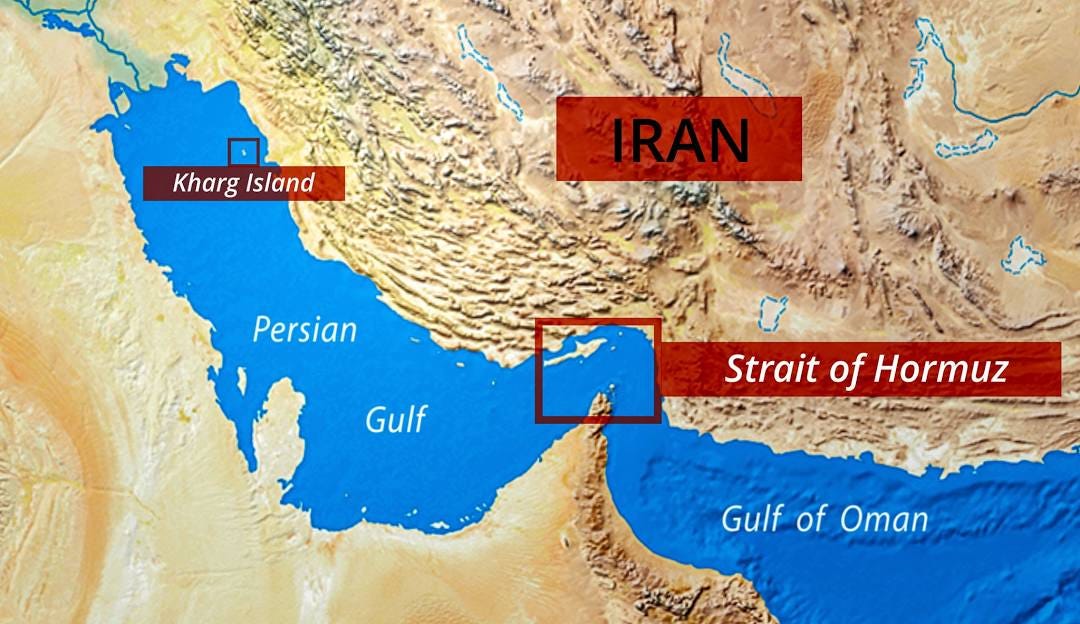
Even after this crisis resolves — after Hormuz fully reopens, after tankers are back on route, after inventories rebuild — the oil market is fundamentally changed because of the latent effects that need to be priced in and the damage done to the infrastructure in the Gulf States. Not to mention the new risk premium that has to be priced into anything passing through Hormuz. Think about what a permanent $20 increase in the oil price floor means for input costs across the entire global economy. Every gallon of gasoline, every heating bill, every airline ticket, every piece of plastic, every fertilizer bag, every food transport cost — permanently higher. Not because of a spike. Because of a structural reset.
 
Just like the prices never came down after covid, once they can get people paying more, they'll stick to it.
 
Fascinating geek reading
“Around the same time I discovered the industrial policy literature, the consensus was shifting within the big economic development agencies (the World Bank and the IMF). Whereas in previous decades, these organizations generally recommended against government meddling in the economy’s industrial structure, they’ve recently started to consider the kind of interventionist policies that Studwell recommends. In 2019, the IMF’s Reda Cherif and Fuad Hasanov wrote a paper called “The Return of the Policy That Shall Not Be Named: Principles of Industrial Policy”. They conclude that a Studwellian approach, if executed competently, can help a developing country grow faster than it would from just letting the market take its course…”
 
Moral of the story: Some regulation is good. Who would have thought?
 
,,,Just to eliminate any doubt, Kevin Warsh is going to be the next chair of the Federal Reserve. Assuming the administration drops the absurd criminal referral against Jerome Powell, Warsh takes the chair. Much of the focus in his confirmation hearing centered on two things: the direction of interest rates and Fed independence...
 
Re: fed independence

Answer is overtly political.
But I will state it plainly.

Has the current president put anyone in a place of power that hasn't sworn fealty to him?

Does anyone believe this is an exception?

Especially an assignment that he himself has shown so much interest in controlling (but is supposed to be out of the hands of the executive)?
 
Last edited:
Back
Top